
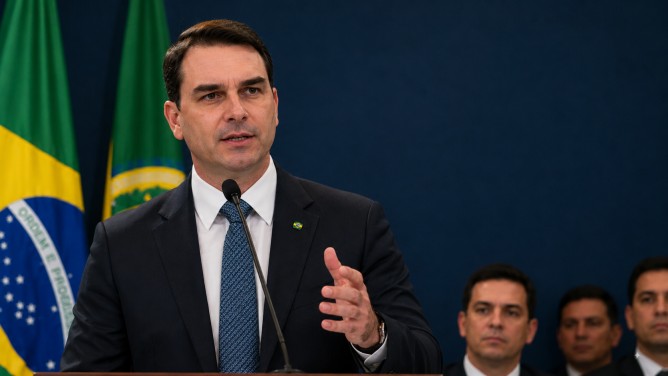
Brazil’s political landscape is seeing a significant development as Senator Flavio Bolsonaro has officially entered the race for the October presidential election. Representing the Liberal Party, Flavio steps into the spotlight following an endorsement from his father, former President Jair Bolsonaro, who has named him as his political successor. The senator’s platform includes commitments to address crime, manage inflation, and reduce high taxes. His campaign positions him as a rival to incumbent President Luiz Inácio Lula da Silva, who is campaigning for re-election.
Despite the strong backing from his father, Flavio Bolsonaro’s campaign confronts several hurdles. These include controversies related to his alleged ties with a businessman currently under investigation, as well as a public dispute within his family involving former First Lady Michelle Bolsonaro. Furthermore, his campaign is navigating criticism regarding new U.S. tariffs that could impact Brazil’s economy. Opinion polls suggest that Lula da Silva holds a slight lead, setting the stage for a closely contested election that may require a runoff.
The election is unfolding against a backdrop of heightened political polarization and economic challenges in Brazil. Notably, trade tensions with the United States have surfaced as a significant issue, adding complexity to the electoral climate. Flavio Bolsonaro has been calling for solidarity among conservative voters, aiming to consolidate support as he gears up for the upcoming vote in October.
As the campaign progresses, both candidates are seeking to address the concerns of a divided electorate. Flavio Bolsonaro’s focus on unifying conservative supporters is a strategic move to bolster his campaign’s momentum. Meanwhile, President Lula da Silva is working to maintain his lead and appeal to a broad base of voters amid the nation’s pressing economic issues.