
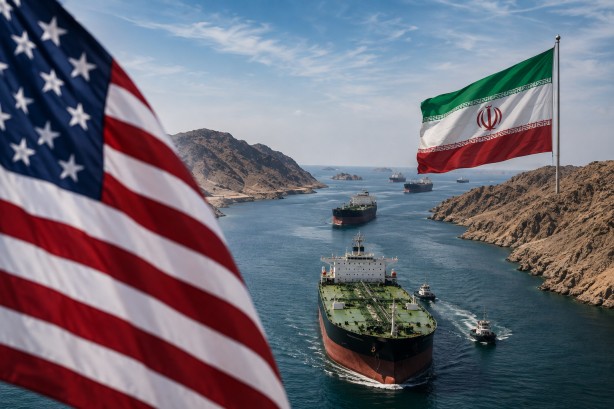
Negotiations between the United States and Iran concerning the reopening of the Strait of Hormuz appear to be advancing, with an agreement potentially on the horizon within the next day or two. US Treasury Secretary Scott Bessent expressed optimism about reaching a breakthrough soon, indicating that discussions with Tehran are ongoing. He highlighted the expectation that commercial vessels would be permitted to transit the strategic waterway without incurring tolls, thus preserving the principle of freedom of navigation.
Qatar, playing a pivotal role as a mediator, has confirmed that a proposed de-escalation framework is currently being reviewed by the involved parties, as diplomatic efforts intensify. The Strait of Hormuz is a crucial passage for global oil and energy shipments and has recently experienced significant disruptions due to escalating regional tensions. The prospect of an agreement has already led to a decrease in oil prices, with analysts forecasting further declines should regular shipping activities resume.
President Donald Trump has recently stated that he delayed planned military action against Iran to provide room for negotiations to proceed. He emphasized that any future agreement should not only focus on reopening the Strait of Hormuz but also include provisions addressing Iran’s nuclear program. This approach reflects a comprehensive strategy aimed at tackling multiple points of contention between the two nations.
Previously, a US-Iran understanding to reopen the waterway fell apart due to disagreements over shipping routes, which contributed to a resurgence of tensions in the region. Currently, negotiators are striving to forge a new agreement that would restore maritime traffic and contribute to regional stability. The ongoing diplomatic efforts underscore the critical importance of the Strait of Hormuz as a linchpin in global trade and energy supply chains.