
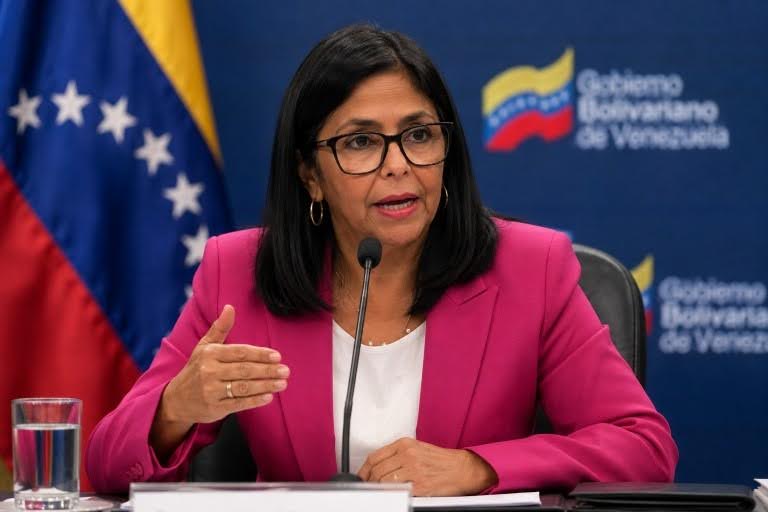
Venezuela’s interim president, Delcy Rodríguez, has staunchly defended a contentious energy deal with the United States, asserting that Venezuela will maintain ownership and sovereignty over its vast oil reserves despite significant domestic criticism. Since assuming leadership earlier this year following the removal of Maduro in a U.S.-led operation, Rodríguez has faced accusations of ceding national resources to Washington. In a national address, she emphasized the agreement’s potential to generate over $209 billion in revenue and elevate Venezuela into a major energy powerhouse. She argued that without essential investment, technology, and infrastructure, the country’s extensive oil reserves remain untapped potential, not contributing to economic development.
The deal, reportedly the result of secret negotiations spanning several months, has sparked considerable controversy due to its provision granting the U.S. control over a significant portion of Venezuela’s crude reserves. These reserves are the largest proven in the world, surpassing those of Saudi Arabia and Iran. According to Rodríguez, the agreement involves 17 strategic oilfields with a target production capacity exceeding 1.5 million barrels per day. Despite the potential economic benefits, the announcement has met fierce opposition from political adversaries and even some within Rodríguez’s own political faction, who view the arrangement as a forfeiture of national sovereignty.
Critics, including a former state oil executive, have labeled the agreement a betrayal and a resource grab without precedent in Venezuelan history. The backlash has manifested in protests on the streets of Caracas, where demonstrators decried what they see as foreign encroachment, and social media users have satirically suggested renaming the state oil company. This development represents a significant shift for Rodríguez, who has historically opposed foreign control over Venezuela’s natural resources, a stance she publicly supported in the past.
Opposition leaders have raised alarms that the deal might jeopardize efforts to reestablish democratic elections in Venezuela. Concerns linger about the timing of future voting, with critics arguing that enduring economic benefits hinge on transparent governance and the restoration of free elections. They warn that without these elements, the agreement stands on precarious ground. As Rodríguez navigates these challenges, the debate over national sovereignty and economic strategy remains at the forefront of Venezuelan politics.