
The proclamation signed by President Trump to introduce a $100,000 H-1B fee is more than just a policy announcement; it is a legal document that will be intensely scrutinized in the courts. Understanding its potential vulnerabilities requires a look at the legal architecture upon which the administration has built its case.
The administration is likely relying on a broad interpretation of the president’s powers under the Immigration and Nationality Act (INA), which grants the executive branch some authority to regulate immigration in the national interest. However, this power is not unlimited and has historically been constrained by specific congressional statutes.
The key point of contention will be the fee itself. Congress has explicitly passed laws that detail how visa fees should be set. As legal expert Aaron Reichlin-Melnick pointed out, that authority is tied to recovering the costs of adjudication. The administration will have to argue that the $100,000 figure is somehow legally justifiable, perhaps by framing it not as a fee but as a different kind of regulation permissible under the INA. This will be a difficult legal argument to win.
Opponents will counter that this is a clear violation of the Administrative Procedure Act (APA), which governs how federal agencies can establish regulations. They will argue that such a drastic change requires a formal rulemaking process, including public comment, which the administration has bypassed by using a proclamation.
Furthermore, the history of court decisions on previous Trump-era immigration policies will play a crucial role. Federal courts have repeatedly blocked attempts to restrict legal immigration through executive action when those actions were seen as arbitrary, capricious, or exceeding the authority granted by Congress. This precedent provides a strong roadmap for those looking to challenge the new H-1B fee.
Behind the Proclamation: The Legal Architecture of Trump’s H-1B Fee
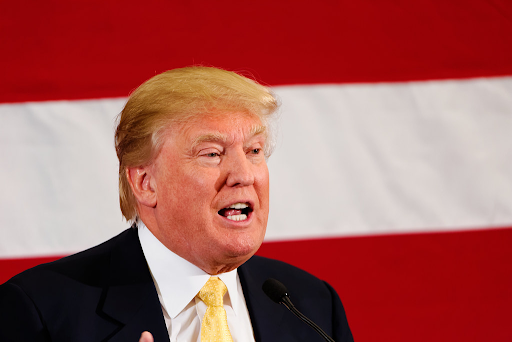
Picture Credit: www.flickr.com
85