
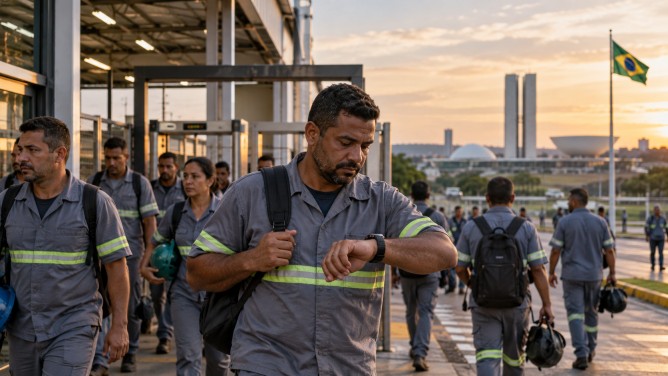
Brazil’s Congress has approved a constitutional amendment to reduce the maximum working week from 44 to 40 hours, signaling a significant victory for President Luiz Inácio Lula da Silva ahead of the presidential runoff on October 25. This reform, which could positively impact over 30 million workers, aims to improve work-life balance by ending the prevalent six-day workweek in sectors like retail, restaurants, and hotels.
The Senate passed the amendment with overwhelming support, as 75 senators voted in favor while only one opposed it. Previously approved by the lower house in May, the reform is designed to give workers more time for rest, family responsibilities, and personal activities. Lula, a strong advocate for the change, argues that it will enhance workers’ quality of life by allowing them more time with their families.
This legislative success presents a strategic advantage for Lula’s electoral campaign, especially among low-income workers who often endure long working hours with minimal rest. His opponent, far-right senator Flávio Bolsonaro, initially opposed the proposal, warning of potential unemployment. However, he later shifted his stance before the Senate vote, acknowledging public support for the measure.
The proposal originated from a grassroots campaign aimed at achieving better work-life balance, later gaining backing from Lula’s political party. Proponents believe that reducing working hours will not only improve workers’ physical and mental health but also provide greater opportunities for education and family care.
Research indicates that the current schedule of only one day off per week can lead to exhaustion, workplace hazards, and limited social engagement, particularly affecting women who manage significant unpaid domestic duties. Despite the Senate’s approval, the reform will not take immediate effect. A 60-day period will follow its formal promulgation, with the maximum working week initially reduced to 42 hours before reaching 40 hours after an additional 14 months.
This decision is pivotal in Brazil’s election campaign, as it allows Lula to demonstrate progress on workers’ rights and economic well-being in his contest against Flávio Bolsonaro.