
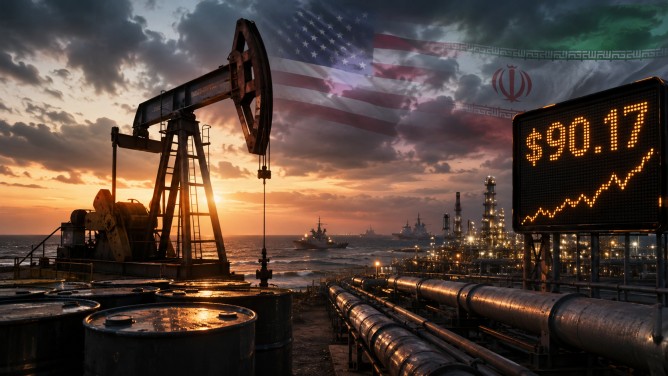
The expiration of a two-month negotiation period between the United States and Iran without reaching a peace agreement has led to a significant rise in oil prices, fueling concerns about potential disruptions to global energy supplies. Brent crude prices have surged, surpassing $90 a barrel and reaching approximately $91.63, marking the highest level since late July. This surge follows a stern demand from US President Donald Trump for Iran to surrender, along with warnings that the conflict could escalate if diplomatic efforts do not succeed.
The geopolitical tension has particularly impacted the Strait of Hormuz, a vital corridor for global oil transportation. A noticeable decline in the number of commercial vessels navigating this crucial passageway has intensified fears of prolonged disruptions in oil supply chains. Investors are bracing for the possibility of a sustained disruption, which could exert further upward pressure on crude prices if the strait faces prolonged closures or restricted traffic.
In response to the stalled negotiations, Iran has suggested it might adopt a more aggressive military stance, increasing the risk of further instability in the region. A reported attack on a cargo ship traversing the Strait of Hormuz has heightened concerns about the security of maritime operations in this strategic area, underscoring the fragile nature of peace efforts in the region.
Analysts caution that the ongoing tensions in the Middle East, coupled with the conflict in Ukraine, could lead to additional shocks in the global energy markets. Such developments are likely to drive up oil and gas prices further, exacerbating the economic strain on countries reliant on these energy sources. The combination of these conflicts poses a significant challenge to maintaining stable global energy supplies.