
Donald Trump’s nomination for the Nobel Peace Prize blurs the line between recognizing a peacemaker and endorsing a president, a distinction the Norwegian Nobel Committee is typically careful to maintain. While his work on the Abraham Accords is a legitimate diplomatic achievement, his highly political and polarizing nature makes him a risky choice for the institution.
The core of his nomination is the 2020 accords. Supporters argue that the committee should focus solely on this action, which successfully established new diplomatic ties in the Middle East. From this perspective, the prize should be awarded for a specific contribution to peace, regardless of the laureate’s broader political identity.
However, the Nobel Peace Prize is never awarded in a vacuum. The committee is aware that selecting a laureate, especially a current or recent head of state, is a powerful political statement. The fierce criticism following the 2009 award to Barack Obama, which many felt was a political endorsement of his agenda rather than a recognition of achievement, serves as a cautionary tale.
Awarding the prize to Trump would be exponentially more controversial. As a deeply divisive figure both at home and abroad, his selection would be seen by millions as a partisan political act. The committee, which guards its reputation for impartiality, would face accusations of taking sides in the contentious landscape of American and global politics.
Given this context, the committee is likely to shy away from such a firestorm. They have a long list of less polarizing candidates—activists, journalists, and international organizations—whose work can be celebrated without plunging the Nobel Prize into a partisan brawl. For the sake of its own institutional integrity, the committee is expected to choose a peacemaker, not a president.
A Prize for a Peacemaker or a President? The Politics of Trump’s Nobel Bid
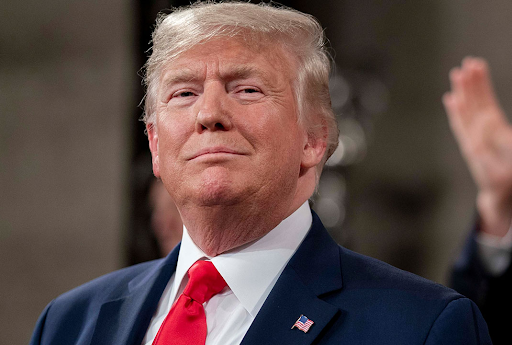
Picture Credit: www.rawpixel.com
113